
About This Book
The work examines the simplest known religious systems to identify the basic elements of religious life, separating beliefs and rites and defining the sacred and profane. It argues that religious phenomena express collective representations and that rituals reinforce social solidarity by embodying communal values. Critiques of animism lead to a focus on totemic forms and the idea of the Church as a social institution. The study further proposes that fundamental categories of thought such as time, space, and causality have social and religious origins, and that religion thus functions both to organize experience and to sustain the moral cohesion of communities.
About the Author

More Books by This Author
3 picks


You May Also Like
6 picks
 "About My Father's Business": Work Amidst the Sick, the Sad, and the Sorrowing
by Thomas Archer
"About My Father's Business": Work Amidst the Sick, the Sad, and the Sorrowing
by Thomas Archer
 "America for Americans!" / The Typical American, Thanksgiving Sermon
by John Philip Newman
"America for Americans!" / The Typical American, Thanksgiving Sermon
by John Philip Newman
 "Bear ye one another's burdens." A Plain Sermon on the Lancashire Distress
by James Galloway Cowan
"Bear ye one another's burdens." A Plain Sermon on the Lancashire Distress
by James Galloway Cowan
 "Beautiful Thoughts"
by Henry Drummond
"Beautiful Thoughts"
by Henry Drummond
 "Billy" Sunday, the Man and His Message / With his own words which have won thousands for Christ
by William T. Ellis
"Billy" Sunday, the Man and His Message / With his own words which have won thousands for Christ
by William T. Ellis
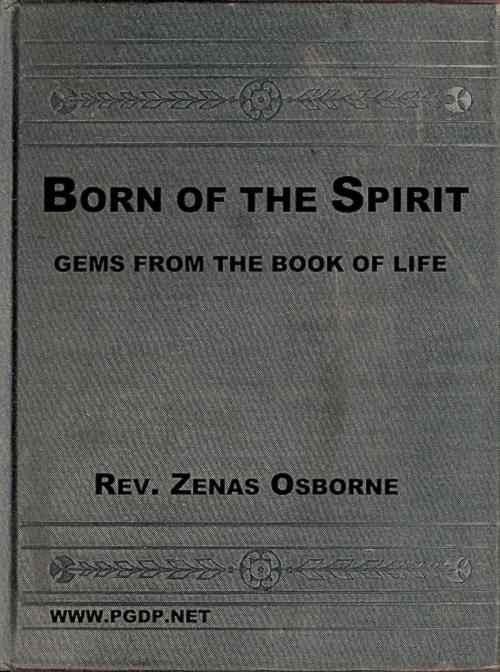 "Born of the Spirit;" or, Gems from the Book of Life
by Zenas Osborne
"Born of the Spirit;" or, Gems from the Book of Life
by Zenas Osborne