| Teocalli of the Sun, Palenque, Yucatan |
Frontispiece |
| Moki Drawings of Stars |
iii |
| Moki Drawings of the Sun |
ix |
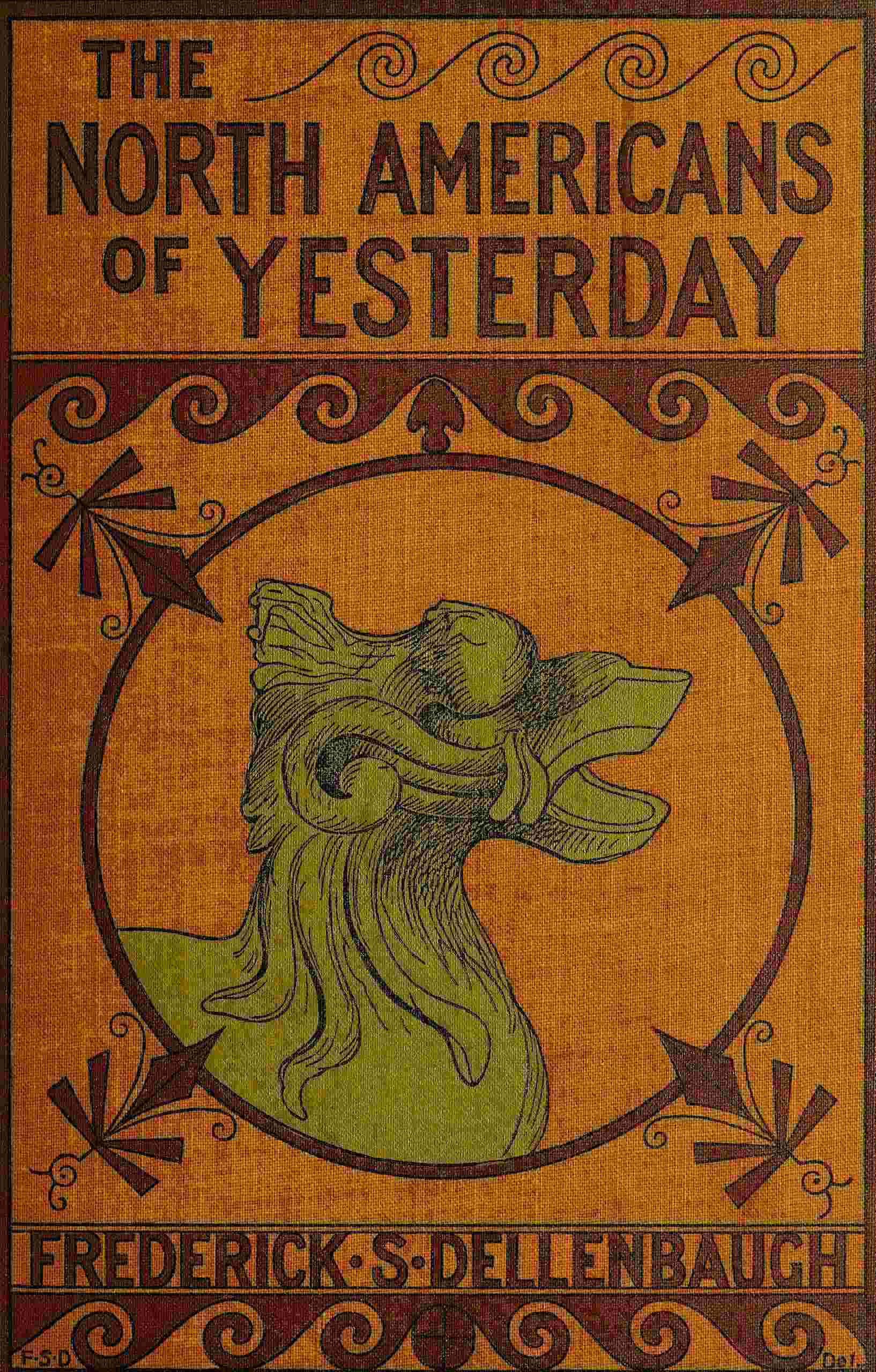
† Gargoyle—Serpent Head
[From débris of temple, Copan] |
1 |
| * South Portion of the Tewa Pueblo of Taos, New Mexico. Adobé Construction |
3 |
† Seated Figure Carved in Trachyte
[From débris of hieroglyphic steps, Copan. Slightly larger than life size] |
5 |
| * Kicking Bear, Sioux |
7 |
A Corner of a Mitla Ruin, Mexico
[From Bandelier’s Archæological Tour, published by the Archæological Institute of America] |
9 |
| † Sculpture from Terrace East of the Great Plaza, Copan |
11 |
| * A Kieskabi, or Covered Passage, at Walpi, Arizona |
13 |
| * Moki Mask of Pawikkatcina |
15 |
| † Specimen of Sculpture on Hieroglyphic Stairway, Copan |
16 |
* Eskimo Jade Adze
[Drawn by Mary Wright Gill] |
17 |
† “Singing-Girl” Sculptured in Trachyte
[From débris of Temple 22, Copan. Slightly larger than life] |
19 |
| * Terra-Cotta Stool, Chiriqui |
20 |
Altar Q, Copan, Honduras
[From photograph by M. H. Saville. American Museum] |
21 |
South-West Corner of the Temple of Xochicalco, State of Morelos, Mexico
[Photographed by M. H. Saville for the American Museum of. Natural History] |
23 |
| * Polished Black Ware, Santa Clara, New Mexico |
27 |
Eastern Façade of the Temple of Xochicalco, State of Morelos, Mexico
[Photographed by M. H. Saville for the American Museum of Natural History] |
31 |
Amerind Linguistic Map of North America
[After the one prepared by the U. S. Bureau of Ethnology] |
33 |
* Fac-Simile of a Cherokee Manuscript
[Written in Sequoyah’s Syllabary] |
35 |
| * Petroglyphs near Wrangell, Alaska, probably Tlinkit |
37 |
| * Human Forms, Moki |
38 |
| * Omaha War Club |
39 |
| * Painted Petroglyphs, Santa Barbara County, California |
40 |
| * Petroglyphs in Brown’s Cave, Wisconsin |
41 |
| * Painted Petroglyphs, Southern Utah |
42 |
| * Petroglyph at Millsboro, Pennsylvania |
43 |
| * Petroglyphs in Georgia |
44 |
| Runic Inscription on Stone Found at Igalikko, Greenland |
45 |
| * Dighton Rock, Massachusetts |
45 |
Illustration of the “Walam Olum” of the Lenapé
[From Brinton] |
46 |
Katcinas in the Somaikoli Ceremony, Cichumovi, Arizona, November, 1884
[Photograph by the Author] |
47 |
| * Killed Two Arikarees |
48 |
| * Petroglyphs on Paint Rock, North Carolina |
49 |
Landa’s Maya Alphabet, after Brasseur
[From Bancroft’s Native Races] |
50 |
* Fac-Simile of the Lord’s Prayer in Micmac Hieroglyphs
[From Le Clercq] |
51 |
| * Sequoyah’s Cherokee Syllabary |
52 |
| * Lean Wolf’s Map, Hidatsa |
54 |
| * The “Penn” Wampum Belt;
* Strings of Wampum |
55 |
| * Orca or Killer-Whale Decoration, Haida |
56 |
| * Haida Tattooing |
57 |
| * Eskimo Drawing—“The Man in the Moon Comes Down” |
58 |
| * Eskimo Picture-Writing |
59 |
| * Specimens of the Dakota Winter Counts |
60 |
| * Killing a Bison |
61 |
| * Shell Disc, Tennessee |
62 |
* Shell Gorget, Tennessee
[Actual size] |
64 |
| Cup Markings |
65 |
| * Cup from Chiriqui |
67 |
| * Terra-Cotta from Chiriqui |
68 |
Page from an Aztec Book
[From a copy in the possession of M. H. Saville] |
70 |
Mexican Writing of Name of Montezuma
[From Brinton] |
71 |
* Part of Plate 65, Dresden Codex
[Maya] |
72 |
| † Vase from Labna, Yucatan, with Peculiar Markings |
74 |
| * Convex Discoidal Stone, North Carolina |
75 |
| † Female Head in Trachyte |
79 |
Usual Type of Sculptured “Yokes,” Central America
[Field Columbian Museum] |
81 |
A Suggestion of the possible Scheme of Maya Numerals. Wholly Tentative
[From drawing by the Author] |
86 |
| * Omaha Calumet |
87 |
| * Omaha War Club |
88 |
| * North-West Coast Feather Ornamentation on Baskets |
89 |
| * Eskimo Bag-Basket |
89 |
| * Moki Wicker Water-Jug |
89 |
| * Havasupai Clay-Lined Roasting Tray |
90 |
| * Iroquois Birchbark Vessel;
* North-West Coast Basket |
91 |
| * McCloud River Basket, California |
92 |
| * Moki Food Basket;
* Klamath Basket |
93 |
| * Moki Food Tray;
* Moki Floor Mat |
95 |
| * Eskimo Whalebone Dish;
* Clallam Basket, Washington |
96 |
| * Amerind Wicker-Work—Apache Basket; Pai Ute Water-Jug; Moki Food Tray; Klamath Basket |
97 |
* Modelling an Olla at Hano
[Photograph by the Author] |
100 |
| * Clay Nucleus |
100 |
| * Method of Building up Coil |
100 |
| * Ware from Moki Region, Arizona |
102 |
| * Cup from Arizona |
103 |
| * Vase from Arkansas, Showing Lines Made with a Sharp Point before Firing |
103 |
| * Bottle-Shaped Vase, Arkansas |
105 |
| * Earthenware Burial Casket, Tennessee |
106 |
| * Death-Mask Vase, Tennessee |
107 |
| * Fluted Vase, Arkansas |
109 |
| * Impression of Parts of Basket Mould on Pottery |
109 |
| * Vase from Chiriqui. Decorated in Black, Red, and Purple |
111 |
An Ancient Figure of Terra Cotta from the Valley of Mexico
[From photograph by American Museum of Natural History] |
113 |
| * Coil Indented for Decoration |
114 |
Zapotecan Terra-Cotta Funeral Urns Found on Cement Floor in Front of Tomb 1, Mound 7, Xoxo, Oaxaca, Mexico
[Photographed by M. H. Saville for the American Museum of Natural History] |
115 |
| * Pot Showing Diagonal Grooves across the Lines of the Coil Made by the Hand in Smoothing up. Mancos Canyon, Colorado |
116 |
Zapotecan Terra-Cotta Tubing Found Leading down into a Field from the Centre of Mound 7, Xoxo, Oaxaca, Mexico
[Photographed by M. H. Saville for the American Museum of Natural History] |
117 |
| * Pueblo Pot. Pattern Produced by Obliterating Pinch Marks |
118 |
| * Pinch-Marked Coil |
119 |
| * Engraved Ware, Arkansas |
120 |
| * Engraved Ware, Arkansas |
121 |
| Black Cup, Chiriqui |
122 |
| * Woven Moccasin from Kentucky Cave |
123 |
| * Menominee Beaded Garters |
125 |
| * Navajo Woman at the Loom |
127 |
Part of the Somaikoli Ceremony at Cichumovi, November, 1884, Showing a Sacred Blanket on Figure in Foreground
[From photograph by the Author] |
129 |
| * Details of Navajo Loom Construction |
131 |
| * A Puebloan of San Juan, New Mexico |
135 |
| * Method of Making Feather-Work |
137 |
| * Chilkat Ceremonial Shirt |
139 |
| * Chilkat Ceremonial Blanket |
142 |
| * Moki Wall Decoration. Pink on a White Ground. Mishongnuvi, Arizona |
144 |
| * Bellacoolas |
145 |
| * Top View of Conical North-West Coast Hat |
146 |
Wonsivu, a Pai Ute Girl
[Posed by Thomas Moran] |
147 |
A Navajo Leader in Native Costume
[Figure from photograph by the U. S. Bureau of Ethnology] |
148 |
| * Interior of a Moki House, Arizona |
149 |
| * Pueblo Head Mat |
151 |
| * Navajos |
152 |
| * Seminole Man’s and Woman’s Costume |
154 |
| * Ear-Perforating and Hair-Dressing of Seminoles |
155 |
| * The Ghost-Shirt, Simple Form |
157 |
* Eskimo Boots
[Drawn by Mary Wright Gill] |
158 |
| * Rain Hat, Haida |
160 |
| * Toucan of Squier and Davis, Really a Crow |
161 |
Deserted Village near Cape Fox, Alaska
[Photographed by the Harriman Alaska Expedition, 1899] |
162 |
Interior House-Column
[Sketch by Author from post at Cape Fox Village, Alaska] |
162 |
| Major Part of Interior House-Post from Cape Fox Village, S. E. Alaska |
163 |
Totem Pole with Bear on the Top, Wrangell
[Sketch by the Author] |
164 |
| * Terra-Cotta Statuette, Chiriqui |
165 |
| * The Bear-Mother, Haida, N. W. Coast |
165 |
| * Wooden Masks, N. W. Coast |
166 |
| * Kwakiutl Carving, N. W. Coast |
167 |
| * Eskimo Carved Ivory Drum-Handles |
168 |
| * Specimen of Moundbuilder Sculptural Skill with Human Figure |
170 |
| * Stone Pipe from North Carolina Mound |
171 |
| * So-Called Elephant Pipe, Iowa |
172 |
| * Toucan of Squier and Davis, possibly Meant for a Young Eagle |
172 |
| * Tripod Vase, Chiriqui. Legs Modelled to Imitate Fish |
173 |
| * Shell Gorget, Missouri |
175 |
| * Bird-Shaped Earthen Bowl, Arkansas |
176 |
| * Shell Mask, Virginia |
177 |
| Moki Sculptural Skill with the Human Figure |
178 |
The Alosaka (Moki)
[After drawing by A. M. Stephen] |
179 |
| * Sculptural Art of Chiriqui |
179 |
| * Shell Gorget, Tennessee |
180 |
The Aztec “Calendar” Stone
[From Bandelier’s Archæological Tour] |
182 |
Aztec Sculpture, the Indio Triste
[From Bandelier’s Archæological Tour] |
183 |
Sanctuary Tablet Temple (Teocalli) of the Sun, Palenque
[Field Columbian Museum] |
185 |
| † “Altar” in Front of Stela D, Copan |
186 |
| † Stela No. 6, Copan; Back of Stela No. 6 |
187 |
| * Puma-Shaped Stool of Grey Andesite, Chiriqui |
188 |
| † Head Sculptured in Stone. Chultunes of Labna, Yucatan |
189 |
Large Built-up Head at Izamal
[From Stephens] |
191 |
| * Stool of Grey Basalt, Chiriqui |
192 |
| * Copper Bell from Tennessee |
193 |
| * Pueblo Mealing Stones |
194 |
Pai Ute Wikiups, Northern Arizona
[From photograph by Colorado River Expedition, 1872] |
195 |
| * Moki Kisi Construction |
196 |
| * Primitive Amerind Ladders |
197 |
| * A Navajo House |
198 |
| * A Sweat House |
199 |
| * An Omaha Tipi |
201 |
| * A Seminole Dwelling |
203 |
| * Mississippi Valley Method of Using Jacal Construction, according to Thomas |
206 |
| * Cliff Outlook, Canyon del Muerto, Arizona |
207 |
Hall of Columns, Mitla
[Field Columbian Museum] |
209 |
Transverse Section (somewhat Generalised) Showing Construction of Palenque Buildings, Yucatan
[Field Columbian Museum] |
210 |
| * Some Details of Pueblo House Architecture—A Triangular Sipapu or Sacred Kiva Orifice; Moki Doorway with Transom; Pueblo Roof Construction; Some Moki Roof Drains |
211 |
| * Moki Notched Doorway, so Made that Large Bundles could be Taken in |
213 |
| A Zuñi Chimney, Moki the Same |
215 |
| One Form of Moki Chimney Hood |
215 |
| * Ground Plan of Eskimo Snow Iglu |
217 |
| * Section of Snow Iglu |
218 |
| * An Alaska Eskimo Winter House, Point Barrow |
219 |
| * Interior Ground Plan of a Moki House |
220 |
| * An Alaska Eskimo Winter House of Wood and Earth, Point Barrow |
221 |
| * Interior of Wood and Earth Iglu |
221 |
| * Stone Steps at Oraibi |
222 |
| * Cliff-Dwelling, Eastern Cove of Mummy Cave, Canyon de Chelly, Arizona |
223 |
Houses in Walpi, One of the Moki Towns, Arizona
[Photograph by U. S. Geological Survey] |
224 |
| * General View of a Group of Cavate Lodges, Arizona |
225 |
| * Plan and Sections of a Cavate Lodge |
227 |
| * Diagram Showing Pocket at Back of some Cavate Lodges |
228 |
| ‡ Theoretic Roof Construction of Mitla |
230 |
| * Ground Plan of a Kiva and Ceiling Plan of Another |
231 |
Chaco Ruins Masonry; Chaco Ruins, Ground Plans
[From Report of Hayden Expedition] |
232 |
| * Ruin Called Casa Grande, Arizona |
233 |
| ‡ Transverse Section of an Ordinary Yucatec Building |
235 |
| ‡ Forms of the Maya Corbel Vault |
237 |
| ‡ Ground Plans of Yucatec Buildings |
238 |
| ¶ Kwakiutl House Front |
239 |
| ¶ North-West Coast Houses and Totem Poles |
241 |
| ‡ Ruin of East Façade and Iglesia, “Palace,” Chichen-Itza, Yucatan |
243 |
| ¶ Elevation of Kwakiutl House |
244 |
| * View in the Moki Town of Mishongnavi, Arizona |
245 |
* Eskimo Horn Dipper
[Drawn by Mary Wright Gill] |
247 |
| * Horn Arrow Straightener |
248 |
| * Modern Iron Arrow-Heads of the Omahas |
248 |
| * Forms of the Bow |
249 |
Pai Ute Palm-Drill
[Drawn by the Author] |
250 |
| ¶ The Palm-Drill (Fire-Making); The Pump-Drill (Fire-Making) |
251 |
| * Eskimo String-Drill (For Fire-Making with Mouthpiece) |
251 |
| * Pueblo Pump-Drill (For Boring) |
251 |
| * Drill-Point of Chipped Flint |
251 |
| ¶ Set of Fire-Making Tools, Bristol Bay Eskimo, Alaska |
253 |
| * Eskimo Bow-Drill |
254 |
| ¶ Modern Rod Armour of the Klamaths, Oregon |
255 |
| ¶ Hupa Rod Armour, California |
255 |
| ¶ Eskimo Plate Armour, Diomede Island, Bering Strait |
257 |
| ¶ Tlinkit Skin Armour, Alaska |
258 |
| ¶ Prehistoric Aleutian Rod Armour |
259 |
* Chipped Flint; Chipped Flint Blunt Arrow-Head, Georgia; Chipped Flint Implement, Tennessee; Specimen “Cores,” or Blocks of Flint; Specimen of Chipped Flint Discs, called “Turtleback,” Mississippi Valley; Grooved Stone Axe, Tennessee (Ground)
[Drawn by Mary Wright Gill] |
261 |
| * Diagram Explaining Terms to be Used in Describing Stone Weapons |
263 |
| ¶ Tlinkit Slat-and-Rod Armour, Alaska, Front View |
265 |
* Apache War-Bonnet
[Drawn by Mary Wright Gill] |
266 |
| * Eskimo Throwing-Boards for Darts |
268 |
| * Eskimo Bird Bolas |
268 |
| * Amerindian Knives |
269 |
| * Moki Throwing-Stick, or Putchkohu; Pueblo Planting Stick; Zuñi Wooden Spade |
270 |
A Moki Throwing the Putchkohu
[From a drawing by the Author] |
271 |
| * Shell Spoon, Mississippi Valley |
273 |
| * Pueblo Mountain Sheep-Horn Spoon |
274 |
| * Menominee Wooden Mortar and Pestle |
274 |
| * Stone House-Lamp, Point Barrow, Alaska |
275 |
| * Eskimo Sledges |
277 |
| * Central Eskimo Dog Harness |
278 |
| ¶ Enclosed Canadian Toboggan or Travelling Sled |
279 |
| * Eskimo Snow-Shoe, Point Barrow, Alaska |
280 |
| ¶ Canoes of the North-West Coast |
281 |
| * Umiak of the Central Eskimo |
282 |
| * Eskimo Kayaks |
283 |
| * Method of Attaching Oars to Umiak |
284 |
| * Method of Tying Frame of Kayak |
284 |
| * Thin Plate of Copper Wrought by Repoussé Method, Illinois Mound |
285 |
| * Amerindian Method of Mining Steatite for Utensils |
287 |
* Chipped Spade
[Drawn by Mary Wright Gill] |
289 |
* Eskimo Stone Maul
[Drawn by Mary Wright Gill] |
290 |
| * Small Figure of Frog in Base Metal, Plated with Gold, Chiriqui |
292 |
Coppers from the North-West Coast; Painted Design in Black Representing a Sea Monster with Bear’s Head; Painted Design Representing a Hawk
[U. S. National Museum] |
293 |
| * Hollow Silver Beads of Navajo Make, Arizona |
294 |
| * Navajo Silver Work, Arizona; Engraved Button; Bracelet |
295 |
| ¶ Kwakiutl Chief Holding his Copper, North-West Coast |
297 |
| * Triple Bell or Rattle of Gold from near Panama |
302 |
| * Bronze Mexican Bell |
302 |
| * Bronze Bells, Plated or Washed with Gold, Chiriqui |
304 |
| * Small Metal Figure, Chiriqui |
306 |
| * Silver Plate with Spanish Coat of Arms |
307 |
| * Moki Rattle of Animal Hoofs |
308 |
| * Amerindian Rattles; Gourd, ; Earthenware Rattlee from Chiriqui; Tin, Ojibwa |
309 |
| * Omaha Large Flute |
310 |
| * Drum of Terra-Cotta, Chiriqui |
312 |
| * Menominee Tambourine Drum |
313 |
| * Omaha Box Drum |
314 |
| ¶ Set of Playing Sticks |
315 |
| * Pueblo Rattles—Turtle Shell with Hoofs of Goats or Sheep, Fastened to the Rear of the Right Leg near the Knee in Dancing; Painted Gourd with Wood Handle |
317 |
| * Zuñi Dance Ornament;
* Moki Notched Stick;
¶ Kwakiutl Double Whistle, with Four Voices |
319 |
| ¶ The Awl Game |
320 |
| ¶ Amerind Gambling Tools—Set of Bone Dice, Arapaho; Set of Counting Sticks, Blackfeet; Set of Plum Stones, Arikaree |
322 |
| * Terra-Cotta Rattle from Chiriqui |
325 |
| * Cat-Shaped Whistle of Terra-Cotta, Chiriqui |
327 |
| ¶ Mandan Game of Tchungkee |
328 |
| * Double Whistle in Terra-Cotta from Chiriqui |
330 |
| ¶ Set of Staves for Game |
331 |
| * “Banner-Stone,” Tennessee |
332 |
| * So-Called Elephant Mound, Wisconsin |
334 |
| * Ancient Fabric Design, from Impression on Pottery, Utah |
335 |
| * Ancient Fabric, Preserved by Copper Celt, Iowa |
336 |
| * Large Mound of the Etowah Group, Georgia |
337 |
A Votive Adz of Jadite from Mexico, Showing Front and Side
[American Museum, Kunz Collection] |
339 |
Back of Votive Adz
[American Museum] |
341 |
| * Patterns of Ancient Fabrics from Pottery; from New York; from Illinois; from Tennessee |
344 |
| * Eskimo Mechanical Toy |
345 |
| ¶ Máhtotóhpa (The Four Bears), a Mandan Chief |
347 |
An Onyx Jar from Mexico in Process of Manufacture
[American Museum] |
349 |
| ¶ Wooden Food Bowl, Haida |
351 |
| * Dancing Mask of the Makahs, Washington |
352 |
| ¶ Moki Wicker Cradle with Awning; Carrying Basket of the Arikarees |
353 |
| ¶ Tlinkit Man and Woman Thirty Years Ago, or about 1870 |
355 |
A Pawnee in Battle Array
[Photographed by J. K. Hillers, U. S. Geological Survey] |
357 |
| ¶ The Kwakiutl Wolf Dance, called Wālasaxa, North-West Coast |
359 |
| ¶ Ute Woman Carrying Child |
361 |
| ¶ Keokuk, a Sauk Chief |
362 |
| ¶ Shrine of the War-Gods, Twin Mountain, Pueblo of Zuñi, New Mexico |
365 |
| ¶ A Costume of a Hāmatsa in the Kwakiutl Cannibalistic Ceremony, where Slaves and Corpses were Formerly Devoured |
367 |
| ¶ Mexican Operating the Palm Drill for Fire |
368 |
| ¶ Zuñi Woman Carrying Water |
369 |
| ¶ Ute Cradle, Frame of Rods Covered with Buckskin |
372 |
| ¶ Eskimo Woman of Point Barrow Carrying Child;
* Apache Woman Carrying Child |
374 |
| * Moki “Snake dance” at Walpi |
376 |
| * Amerindian Picture-Writing |
377 |
| * Beginning of the Moki “Snake Dance” at Walpi |
378 |
| ¶ Horned Rattlesnake, Crotalus Cerastes |
380 |
| ¶ The Okeepa Ceremony of the Mandans, Lasting Four Days |
382 |
| * The Sacred Pole of the Omaha |
383 |
Cruciform Stone Tomb, Oaxaca
[American Museum] |
384 |
| Ground Plan of Cruciform Tomb, Oaxaca |
385 |
| * Amerindian Art |
387 |
| Moki Earthen Canteen, Arizona |
388 |
| ¶ Modern Laced Sandal of Leather from Colima, Mexico |
389 |
| * Eskimo Pipe with Stone Bowl |
390 |
Teocalli (Temple) of Tepoztlan, State of Morelos, Mexico
[Monumental Records] |
391 |
| ¶ Kwakiutl Wood-Carving of the Sīsul North-West Coast |
392 |
| ¶ Rushing Eagle, 1872 |
394 |
| * Fine Cloth Preserved by Copper Beads |
395 |
| * Ancient Fabric-Marked Potsherds, with Clay Casts by Holmes |
398 |
| ¶ Ehtohkpahshepeeshah, the Black Moccasin, Chief of the Minatarees, over One Hundred Years Old |
400 |
Lacandon (Mayan) Amerind from Chocolhao, Yucatan
[Photographed by M. H. Saville] |
402 |
One of the Buildings of the Palenque Group
[Photographed by M. H. Saville] |
404 |
| ¶ Costume Worn in the Kwakiutl Festivals, called Laōlaxa, North-West Coast |
406 |
God-Houses of the Huichols at Teakáta, near Santa Catarina, State of Jalisco, Mexico
[American Museum] |
409 |
| * Eskimo Mask of Wood, Prince William Sound, Alaska |
410 |
Plenty-Horses, a Cheyenne
[U. S. Geological Survey] |
413 |
| ¶ North-West Coast Basketry Hats |
415 |
| ¶ North-West Coast Mortuary and Commemorative Columns |
417 |
| ¶ Ancient Puebloan Moccasins of Fibre, Arizona |
422 |
| ¶ Chimmesyan Head-dress Representing the White Owl |
426 |
| ¶ Wooden “Seal” Dish, Haida |
428 |
Tlinkit Summer Camp
[Photographed by the Harriman Alaska Expedition, 1899] |
429 |
Eskimo Summer Camp, Port Clarence
[Photographed by the Harriman Alaska Expedition, 1899] |
431 |
| * Wooden Snow Goggles of the Central Eskimo |
433 |
Principal Known Ruins of Central America
[American Museum] |
436 |
| * Necklace of Dried Human Fingers Obtained on Battlefield of Wounded Knee by Captain Bourke |
437 |
Principal Known Ruins of Mexico
[American Museum] |
438 |
Probable Aspect of Alaska Summer Landscape some Six Hundred Years Ago
[Harriman Alaska Expedition, 1899] |
440 |
| * A Puebloan Warrior of Nambé, New Mexico, in Battle Array |
442 |
| ¶ Apache Woman Carrying Water in a Wicker Bottle |
444 |
Group of Eskimo, Port Clarence, Alaska
[[Photographed by the Harriman Expedition, 1899]] |
446 |
| * Shell Spider Gorgets |
447 |
| ¶ Black Hawk |
448 |
Portion of the So-Called “Palace” of Labna, Yucatan
[American Museum] |
450 |
Musical Bow of the Southern Tepehuanes and the Aztecs, Mexico
[American Museum] |
451 |
| ¶ General Type of Chimmesyan, Haida, and Tlinkit Chief’s Costume, North-West Coast |
452 |
| * Perforated Discoidal Stone, Illinois |
453 |
Hobobo, the Fire Katcina, in the Somaikoli Ceremony, Cichumovi, 1884
[From a drawing by the author] |
454 |
Circle of Dancers in the Intervals between the Appearances of the Various Katcinas in the Moki Somaikoli Ceremony, Cichumovi, Arizona, 1884
[Photographed by the author] |
455 |
Front of the House of Columns, Mitla, Oaxaca
[American Museum] |
457 |
| A Costumed Human Figure from Tampico, Washington |
459 |
| Entrance of a Tomb at Culapa, Mexico |
460 |
| * Stick Used in the Awl Game |
461 |
| ¶ Wooden Seal-Dish, Haida, North-West Coast |
478 |
| ¶ The Swastika |
488 |
 WeRead
Powered by ReaderPub
WeRead
Powered by ReaderPub