
About This Book
The work traces the development of a continental power from revolutionary ideals through the processes that produced overseas influence. It links the displacement of indigenous peoples, the institutionalization of racial slavery, and westward expansion to the rise of concentrated private wealth and political power. It analyzes how industrial growth, wartime competition, and economic rivalry shaped overseas ambitions and hemispheric policies, considers the role of financiers and corporations in global partitioning, and concludes by examining labor movements and international realignments that challenge imperial arrangements.
About the Author

More Books by This Author
5 picks
 Civilization and Beyond: Learning from History
by Scott Nearing
Civilization and Beyond: Learning from History
by Scott Nearing
 The Debs Decision
by Scott Nearing
The Debs Decision
by Scott Nearing
 The New Education / A Review of Progressive Educational Movements of the Day (1915)
by Scott Nearing
The New Education / A Review of Progressive Educational Movements of the Day (1915)
by Scott Nearing
 The Next Step: A Plan for Economic World Federation
by Scott Nearing
The Next Step: A Plan for Economic World Federation
by Scott Nearing
 The Super Race: An American Problem
by Scott Nearing
The Super Race: An American Problem
by Scott Nearing
You May Also Like
6 picks
 "'Tis Sixty Years Since" / Address of Charles Francis Adams; Founders' Day, January 16, 1913
by Charles Francis Adams
"'Tis Sixty Years Since" / Address of Charles Francis Adams; Founders' Day, January 16, 1913
by Charles Francis Adams
 "1683-1920" / The Fourteen Points and What Became of Them—Foreign Propaganda in the Public Schools—Rewriting the History of the United States—The Espionage Act and How It Worked—"Illegal and Indefensible Blockade" of the Central Powers—1,000,000 Victims of Starvation—Our Debt to France and to Germany—The War Vote in Congress—Truth About the Belgian Atrocities—Our Treaty with Germany and How Observed—The Alien Property Custodianship—Secret Will of Cecil Rhodes—Racial Strains in American Life—Germantown Settlement of 1683 and a Thousand Other Topics
by Frederick Franklin Schrader
"1683-1920" / The Fourteen Points and What Became of Them—Foreign Propaganda in the Public Schools—Rewriting the History of the United States—The Espionage Act and How It Worked—"Illegal and Indefensible Blockade" of the Central Powers—1,000,000 Victims of Starvation—Our Debt to France and to Germany—The War Vote in Congress—Truth About the Belgian Atrocities—Our Treaty with Germany and How Observed—The Alien Property Custodianship—Secret Will of Cecil Rhodes—Racial Strains in American Life—Germantown Settlement of 1683 and a Thousand Other Topics
by Frederick Franklin Schrader
 "America for Americans!" / The Typical American, Thanksgiving Sermon
by John Philip Newman
"America for Americans!" / The Typical American, Thanksgiving Sermon
by John Philip Newman
 "Billy" Sunday, the Man and His Message / With his own words which have won thousands for Christ
by William T. Ellis
"Billy" Sunday, the Man and His Message / With his own words which have won thousands for Christ
by William T. Ellis
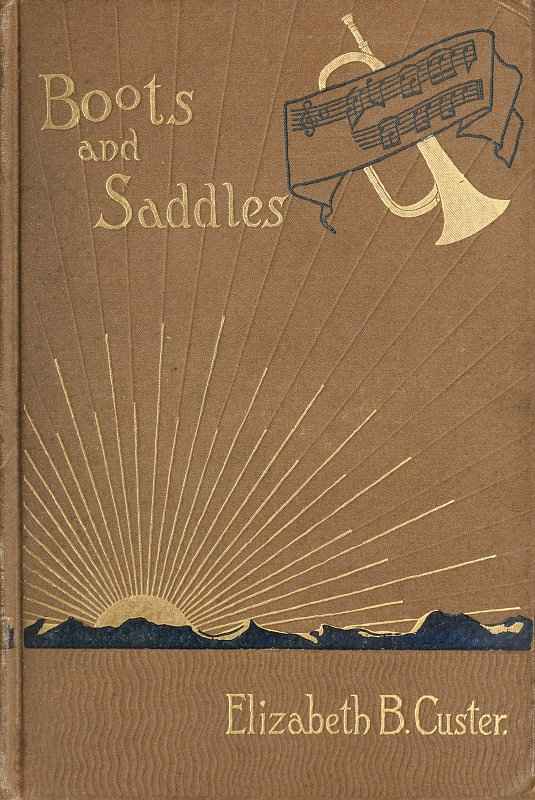 "Boots and Saddles"; Or, Life in Dakota with General Custer
by Elizabeth Bacon Custer
"Boots and Saddles"; Or, Life in Dakota with General Custer
by Elizabeth Bacon Custer
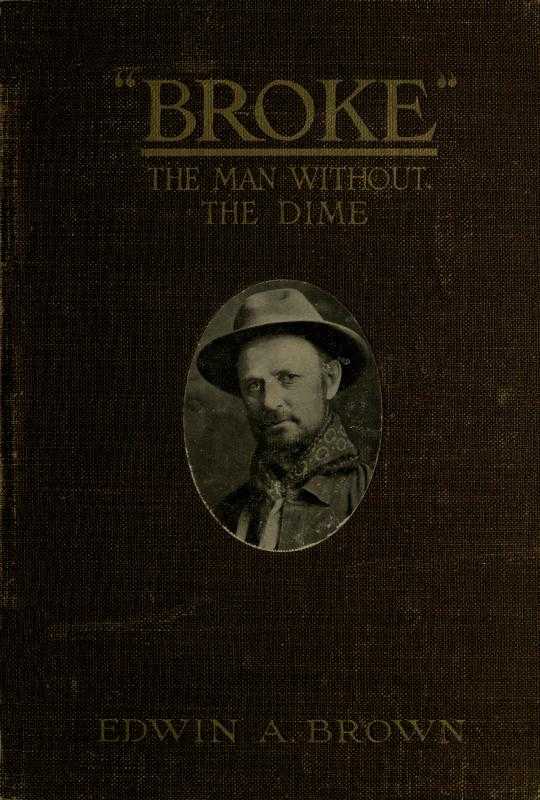 "Broke," The Man Without the Dime
by Edwin A. Brown
"Broke," The Man Without the Dime
by Edwin A. Brown